
TL;DR
Water in New York, New York City, New Jersey, and Connecticut can stain marble due to minerals and iron, but water alone does not etch marble. Etching is always caused by acids like citrus, wine, coffee, or acidic cleaners. In the Tri-State Area, marble damage most often comes from a combination of hard water staining and everyday acid exposure — which is why professional restoration and true etch-resistant protection matter.
Homeowners throughout the Tri-State Area often ask the same question:
“Is our water ruining our marble?”
The answer is yes — water in this region can damage marble, but not in the way most people think. Understanding the difference between marble staining vs. marble etching is essential for proper care, restoration, and long-term protection.
At Stoneshine, we restore marble countertops, floors, showers, and vanities every day across New York, New Jersey, and Connecticut. What we see most often is not a “bad stone,” but stone reacting exactly as marble does when exposed to hard water, minerals, and household acids.
Can Water Etch Marble?
No. Water does not etch marble.
Marble etching is a chemical reaction that occurs when calcium carbonate (the main component of marble) comes into contact with acidic substances. Pure water is neutral and cannot cause this reaction.
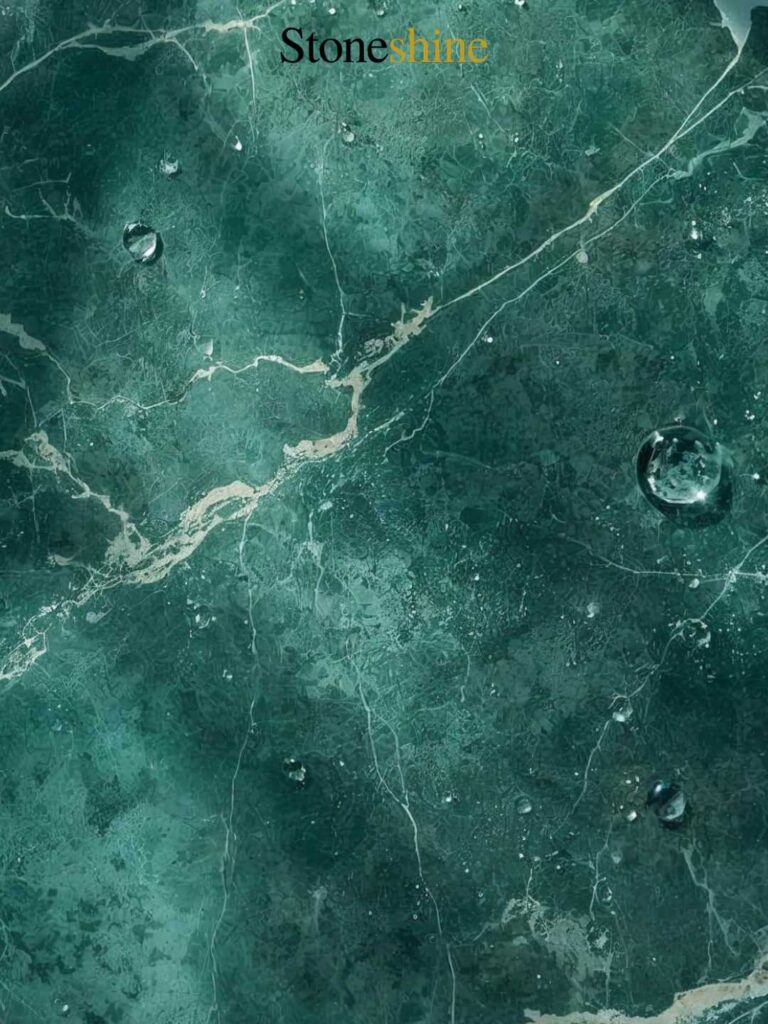 Common causes of marble etching:
-
Lemon juice, citrus, vinegar
-
Wine and alcohol
-
Coffee and tea
-
Tomato sauce
-
Many household and “natural” cleaners
Etching appears as:
-
Dull or chalky spots
-
Lightened areas
-
Loss of polish or reflection
If your marble looks dull near sinks or prep areas, acid exposure is always involved.
Can Water Stain Marble?
Yes — and this is extremely common in the Tri-State Area.
Much of NY, NJ, and CT has hard water or mineral-rich water supplies. When water sits on marble, evaporates, or repeatedly contacts the surface, minerals can be left behind or absorbed into the stone.
Common water-related marble stains:
-
Dark moisture stains near faucets
-
White calcium or lime buildup
-
Rust-colored stains from iron
-
Cloudy residue that dulls the surface
These are physical stains or deposits, not etching — but they are frequently mistaken for etch damage.
Why Marble Is More Vulnerable in NY, NJ, and CT Homes
The Northeast creates a challenging environment for marble:
-
Hard water with calcium and magnesium
-
Older plumbing systems with iron content
-
Seasonal humidity and temperature changes
-
High-use kitchens and baths
-
Marble installed without true etch protection
As a result, marble often experiences both water staining and acid etching at the same time, especially around sinks, vanities, and kitchen prep zones.
Why Sealing Alone Isn’t Enough
Standard marble sealers are designed to slow liquid absorption, not prevent chemical reactions.
This means:
-
Sealers may help reduce staining temporarily
-
Sealers do not prevent etching
-
Acid damage can occur instantly, even on freshly sealed marble
This is one of the most common misconceptions homeowners encounter after installation.
What Actually Protects Marble Long-Term
For marble surfaces in NY, NJ, and CT, effective care requires more than sealing alone.
What works:
-
Professional marble restoration to remove existing stains and etching
-
True etch-resistant protection (beyond traditional sealing)
-
pH-neutral stone cleaners
-
Consistent wipe-down near sinks and faucets
What doesn’t work:
-
Acidic or vinegar-based cleaners
-
DIY polishing products
-
Resealing as a stand-alone solution
The Stoneshine Approach to Marble Care
Marble is a natural material that reacts to its environment. Changes over time are not flaws — they are predictable responses to use, water chemistry, and cleaning habits.
At Stoneshine, we focus on:
-
Correct marble restoration, not replacement
-
Education for homeowners, designers, and builders
-
Long-term protection strategies that match real-world conditions
Bottom Line
-
Water in NY, NJ, and CT can stain marble
-
Water alone does not etch marble
-
Acids always cause etching
-
The combination of hard water + daily use is why marble needs smarter protection in the Tri-State Area
If your marble looks dull, stained, or worn, professional restoration is often all that’s needed to bring it back — and protect it properly going forward.
Stoneshine has been restoring and protecting natural stone across NY, NJ, and CT since 1989.
If you’d like an expert evaluation or guidance on long-term marble protection, we’re here to help.