
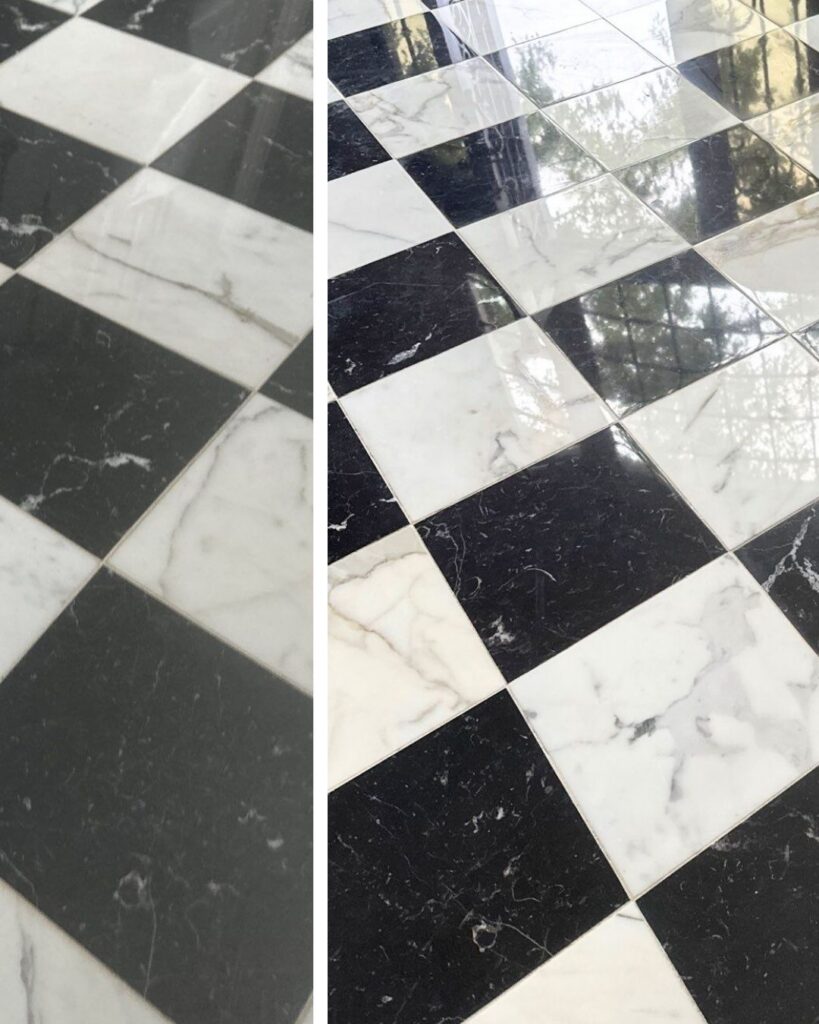
 A marble floor can be well maintained and still begin to look dull. Regular cleaning may remove surface soil, but it cannot correct worn traffic paths, fine scratches or damage to the stone’s finish.
This is common in foyers, kitchens, bathrooms, hallways and other frequently used spaces. It is especially noticeable in homes and buildings with abundant natural light, where every uneven patch becomes easier to see.
When marble no longer looks polished after cleaning, the issue is often the condition of the stone itself.
Cleaning and Polishing Are Different Processes
Cleaning removes dust, soil, grease and residue from the surface. Polishing restores the smooth finish that allows marble to reflect light.
A professionally polished marble floor does not get its shine from wax or a bottled product. The reflection comes from the surface of the stone. When that surface becomes worn, scratched or etched, light no longer reflects evenly.
The floor may be completely clean and still appear cloudy or flat.
Foot Traffic Creates Fine Scratches
Marble is a lasting material, but everyday use will gradually affect its finish.
Small particles of sand and grit enter a property on shoes, delivery carts, luggage and equipment. Underfoot, those particles act like a fine abrasive. Over time, they leave thousands of tiny scratches in the marble.
Common signs include:
- Dull paths through hallways and foyers
- Worn areas near entrances, elevators and stairs
- Cloudiness around kitchen islands
- Uneven shine near sinks and vanities
- A stronger reflection along walls and edges
These differences often reveal where the floor receives the most use. Routine cleaning can remove the grit, but it cannot remove scratches that are already present.
Dull Spots May Be Etching
Etching is another frequent cause of dull marble.
Marble contains calcium, which reacts with acidic substances. Wine, citrus, vinegar, tomato sauce and some household or commercial cleaning products can alter the stone’s surface.
An etched area may look like a pale mark, a water ring or a dull splash. It is often mistaken for a stain, but the two are different.
A stain has entered the stone and changed its color. An etch has changed the finish. Each problem requires a different treatment.
Traditional penetrating sealers may help slow the absorption of staining liquids, but they do not prevent acidic substances from etching marble.
Cleaning Products Can Leave Residue
A cloudy appearance does not always mean the marble needs to be refinished. Sometimes the problem is product buildup.
Using too much cleaner, working with soiled water or applying a product not intended for natural stone can leave a film behind. Wax-based products and shine enhancers may offer a temporary improvement, but they can also build up, attract soil and make professional maintenance more difficult.
Marble should be maintained with a properly diluted, pH-neutral cleaner made for natural stone. Vinegar, abrasive powders and harsh general-purpose cleaners should not be used.
If a home has household staff or an outside cleaning service, it is worth confirming which products are being applied to the stone. A well-meaning product change can quickly affect a marble finish.
Can the Original Finish Be Restored?
In most cases, yes.
The correct treatment depends on the type of marble, its current condition and the finish appropriate for the space. Some floors require a thorough professional cleaning. Others need to be honed to remove wear, scratches and etching before polishing can begin.
A complete restoration may include:
- Identifying the stone and evaluating its condition
- Reviewing previous treatments or coatings
- Protecting adjoining walls, millwork and furnishings
- Deep-cleaning the stone and grout
- Honing the marble to correct surface damage
- Polishing it to the desired finish
- Sealing it when appropriate
The work must be consistent across the entire floor. Edges, corners, thresholds and transitions require the same level of attention as the open areas.
A floor should not simply look shiny in the center. It should have an even, properly finished appearance throughout the room.
Polished or Honed Floors?
Not every marble floor should have a high-gloss finish.
Polished marble has a crisp reflection and a more formal appearance. It is often chosen for entrance halls, formal living spaces and decorative interiors.
Honed marble has a softer, low-sheen finish. It may be better suited to certain high-use areas or properties with a quieter design style.
The choice should be based on the marble, the architecture, the use of the room and the owner’s preferences. An experienced stone professional can explain how each finish will look and perform before restoration begins.
Avoid Temporary Floor Shine Products
When a marble floor looks tired, applying wax, polish or a shine-restoring product may seem like an easy solution. These products can hide the problem for a short time, but they may also create streaks, collect soil or leave a coating that must later be removed.
The first step should be finding out why the stone looks dull.
Residue may require professional cleaning. Scratches, etching and traffic wear require refinishing. Identifying the problem correctly protects the marble from unnecessary treatments.
Protecting the Restored Floor Finish
Once a marble floor has been restored, a thoughtful maintenance plan will help preserve it.
- Use effective matting at exterior entrances.
- Remove dry soil and grit regularly.
- Clean spills promptly.
- Use a pH-neutral cleaner made for natural stone.
- Avoid vinegar, harsh chemicals and abrasive products.
- Place suitable protectors beneath furniture.
- Check wheels and floor equipment for trapped grit.
- Have high-traffic areas evaluated before wear becomes severe.
- Make sure the people who are routinely cleaning understand the care requirements.
Marble does not need complicated care. It needs the correct care, performed consistently.
More Than 35 Years of Stone & Floor Care Expertise
For more than 35 years, Stoneshine has restored marble and natural stone throughout New York, New Jersey and Connecticut. Our work ranges from private homes and Manhattan high-rises to luxury estates and major municipal properties.
Our team brings generations of stone knowledge to every project. We identify the material, study the condition and recommend the process that best serves the stone and the property.
Our standards are rooted in an old-world approach to craftsmanship: know the material, prepare carefully, perform the work properly and respect every property entrusted to us.
If your marble floor still looks dull after regular cleaning, it may not need a different cleaning product. It may be time to restore the finish.
Contact Stoneshine to arrange an evaluation of your marble or natural stone surfaces in New York, New Jersey or Connecticut.